Part of our 10-Year Impact Series, celebrating the students, builders, and dreamers who make BOT’s mission possible.
Ten years ago, BOT set out to connect with members of the Orlando tech community and provide a safe space for underrepresented communities to thrive. A decade later, this mission has flourished, with BOT providing accessible opportunities to learn, build, and scale in tech. This year, BOT is celebrating that mission by sharing the stories of the people who lived it.
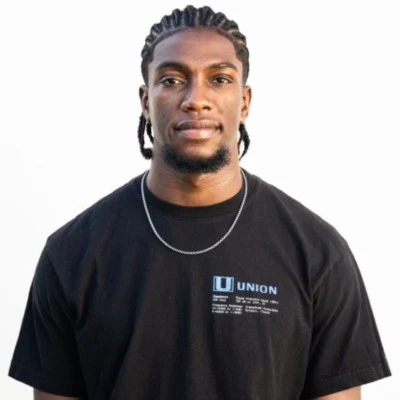
This week, we’re sharing the story of Emmanuel Anderson, who walked into BOT as a college student with a camera and curiosity, and walked out with the experience and dedication that propelled him to a successful career. His story proves the “traditional path” into tech is a myth, and that the right internship at the right time can change a life’s entire trajectory.
Here’s Emmanuel, in his own words.
Meet Emmanuel Anderson
Tell us a bit about yourself and what you do today.
“My name is Emmanuel Anderson, and I grew up in New Jersey for the majority of my life. For undergrad, I graduated from the University of Maryland, College Park, with a double major in English and Philosophy. I originally wanted to become an agent helping authors get published and had no interest in working in music or technology.
The pandemic ultimately changed those plans, and I ended up attending Full Sail University to pursue my graduate degree in Entertainment Business, where I met Joshua and Emily Walker. When I first started at Full Sail, I wanted to pursue a career in music publishing because I wanted to help musicians get paid for their work. I wasn’t able to secure an internship in that field, but I did land an internship with Universal Music Group in the Music Strategy & Tactics department, which no longer exists.
At the end of that internship, I secured a full-time, entry-level position at Interscope Records, where I spent two and a half years in the Urban Digital Marketing department. This year, I joined Stem, an independent music distributor, as the Director of Creator Partnerships and Viral Marketing.
Today, I help artists develop their audiences through social media and CRM platforms, using a combination of influencer marketing, IRL pop-up events, and editorial coverage across new media and social platforms.”
Finding BOT
What first brought you to BOT, and what was your world like before the internship?
“While at Full Sail University, I was looking for any opportunity to learn more about what the entertainment industry had to offer. The school hosted sessions every Friday where alumni would speak with students, sharing advice based on their own experiences. I attended a talk where Joshua Walker spoke to students, and I connected with him after the event because he was the first speaker I had come across who looked like me. When he mentioned his organization, BOT, I decided to just show up. He and Emily welcomed me with open arms. Before BOT, I could barely type on my computer. I was an avid reader, but I wasn’t necessarily tech-savvy. Through BOT’s events and networking opportunities, I became much more interested in technology and AI. I decided that if they ever needed anything from me, I would make myself available and help however I could.”
What made you say yes to an internship focused on video and photography in the tech space?
“I genuinely wanted to be around people smarter than me. I didn’t have a specific end goal in mind, but I knew that if I surrounded myself with good people, treated them kindly, and stayed open to learning, they would be willing to teach me.
I wasn’t particularly skilled in video or photography at first, but being at Full Sail gave me access to many friends in the Film department who were willing to teach me how to use my camera more effectively and to edit with software like Adobe Lightroom and Premiere Pro. In exchange, I could offer them business advice from what I was learning in my graduate classes.
We found ways to work together and exchange skills. If someone taught me something during the day, I would turn around and offer those skills to BOT at their events that night. Luckily, it worked. I improved quickly because I stayed open-minded and never approached people expecting something in return. I think people appreciated that, and it opened many doors for me.”
Walk us through your first few weeks as an intern with BOT. What surprised you most about working in tech media and storytelling?
“What surprised me most was how organized everything was. I remember my first meeting with Safia, when she told me she would start planning marketing initiatives three months in advance. That was completely new to me.
They also introduced me to tools and concepts like Slack and LinkedIn Marketing, which helped me quickly learn how to conduct myself in a professional organization. I definitely felt behind. Up until that point, the only jobs I had ever really had were working as a basketball coach and as a bouncer at a local dive bar in college. I never imagined I’d naturally fit in with people who worked in corporate jobs, but everyone at BOT was welcoming, cool, and patient with me. That made it easy for me to keep coming back and learning every week.
Ultimately, what surprised me most was realizing that the people I imagined as completely different from me weren’t actually that different. BOT completely changed my perspective on what it meant to work in a professional environment, and that experience eventually gave me the confidence to apply for jobs at major record labels.”
Skills and growth: the BOT experience
What specific skills did you build during your internship that you still use today as a Director?
“Planning, for sure. Every day now, I talk to a new artist or label partner about what we should do next, so I’m much more forward-thinking than I was before. I also developed a better understanding of how to build a brand. BOT gave me experience in areas like email marketing, while being the person behind the camera taught me to recognize quality creative work. That experience still helps me today when I’m hiring photographers and videographers to support artist rollouts.”
Was there a project, shoot, or moment during your internship that changed how you saw your own potential?
“I would say every event I attended taught me something about what I could eventually do. At first, I was nervous walking into rooms with people who were further along in their careers than I was. Over time, though, I became more comfortable in those environments. Now I can walk into those same kinds of rooms with confidence, and I know that my time with BOT played a huge role in making that possible.”
How did creating video and photography content for a tech nonprofit shape the way you think about storytelling and communication in your career?
“It taught me that I have to be willing to speak to everyone in order to tell a good story. There is no such thing as the ‘most important person in the room.’ Every person who shows up to an event is important, and each person brings a unique perspective that can contribute to effective marketing and help tell stories that actually matter.”
Looking back, what’s one skill you didn’t expect to learn that turned out to be essential to your success?
“Team communication. I was used to doing most things on my own for the majority of my life outside of sports. I’ve played basketball my entire life, so teamwork wasn’t a foreign concept to me, but before BOT, I understood it only in the context of sports. At BOT, I had to learn to understand everyone’s unique role within the organization and to make sure I was contributing in ways that made others’ jobs easier, rather than just focusing on completing my own work. That lesson has stayed with me throughout my career.”
Connections and community: the relationships that changed everything
Who made the biggest impact on your journey as an intern, and how?
“Joshua and Emily both had a huge impact on me. They kept me accountable, but they also consistently checked in on me as a person, not just as an intern. I still feel supported by both of them to this day. Safia also had a significant impact on me. Although we haven’t spoken much recently because we’re both very busy, every meeting I had with her taught me something about how a professional should conduct themselves. Jehue was also incredibly instrumental in my development. He’s one of the smartest, hardest-working, and kindest people I’ve ever met, and he still checks in on me to this day. Being around him showed me the kind of colleagues I should look for throughout my career. More importantly, he modeled what it looks like to be genuinely passionate about the work you’re involved in.”
How did the relationships you built during your internship continue to shape your career path after you left?
“They all taught me that I belonged in the rooms I was entering. I try to extend that same sense of kindness to people who reach out to me now looking for guidance on how to enter the music industry. I’m not always able to connect with everyone who messages me for advice, but when I have the time, I try to go above and beyond for people because I know from my own experience how much that kind of support can mean to someone.”
In what ways has staying connected to the BOT community helped you grow professionally?
“I feel like I know about things before most people do now — not necessarily everything, but I’m rarely blindsided by new technological advancements. The exception is when I talk to people at BOT. When people were first experimenting with LLMs after they became widely popular, BOT had already been hosting classes and workshops on how to use them to build your career and capitalize on emerging technologies more broadly.”
From intern to Director
What does it feel like to go from intern to Director, and what does that journey say about the power of accessible tech opportunities?
“My ability to work across different projects has improved dramatically, and my networking skills have grown tremendously as well. By leveraging my knowledge of emerging technology platforms in my industry, I’ve become an asset to people who need help navigating their music careers. When technology becomes accessible, people’s opportunities can increase dramatically. For me, it has given me a voice in rooms that I never imagined I would be in.”
What advice would you give to someone starting their own tech internship today, especially those who don’t see a “traditional” path to a tech career?
“Do extra work, listen, and don’t always have your hand out asking for something. You have to be open-minded and understand that the people ahead of you are often there for a reason. The more you lean on them, learn from them, and provide assistance when they need it, the better off you’ll be. My background was about as far away from tech as you could imagine, and now I’m a Director at a company whose competitive advantage comes, in part, from adopting technology earlier than its competition. That became possible because I was willing to take the time to learn about technology, understand how to use it, and figure out how to make a meaningful difference with it.”
How has your understanding of accessibility and economic mobility in tech evolved from your time as a student to where you are now?
“I would say it’s still evolving. It’s only been about three years since I entered the workforce, so I know my understanding of these issues still has a long way to go. What I do know is that communities that receive the care, attention, and opportunities necessary to leverage new technologies will ultimately be better positioned to succeed.”
Reflection and legacy
As we celebrate 10 years of impact, what does it mean to you to be part of that story?
“I’m happy to say that the people I ended up surrounding myself with genuinely had my best interests at heart. Now, when I meet other students of color looking for an opportunity to get their foot in the door, I know any advice or support I can offer can go a long way. Because of BOT, I try to make sure I’m always paying that kindness forward.”
If you could tell your intern-self one thing about where you’d end up, what would it be?
“Get sleep now, because you’ll be very busy very soon.”
What do you hope other young people take away from your journey, and what would you say to someone considering an internship with BOT?
“To young people who are like I was, without a long list of accolades or a background that immediately attracted attention early in their careers, I want them to know that there is still time. Don’t rush anything, but stay consistent with the new interests you’re discovering. Don’t get frustrated if you get rejected from the big, fancy internship. Find people willing to support you, teach you, and give you a chance to learn. And if you end up at BOT, ask questions, stay connected with people, and most importantly, keep showing up.”
Your chance to write the next impact story
Emmanuel’s journey from student to intern to Director didn’t happen overnight in isolation. It happened because a community showed up for him with mentors and a mission to make tech accessible to everyone. For ten years, BOT has shaped stories like Emmanuel’s, changing their trajectories with accessible programs and events. But we can’t do it without people like you.
You can help write the next chapter:
- Volunteer your time and expertise to mentor the next generation of tech talent.
- Sponsor a program and help remove barriers to opportunity.
- Donate to fuel the next 10 years of stories just like this one.
Whatever your own way looks like, there’s a place for you in this mission. Get involved with BOT today and help us build the next decade of impact, one story, one internship, one opportunity at a time.
Celebrate with BOT
Join us for a night of excellence at the Brilliance in Orbit Gala on Saturday, November 14, 2026, starting at 5:00PM. Join BOT alumni and community members as we celebrate ten years of impact and the people whose stories we’ve been part of. Learn more about the gala and grab your tickets.